
Sustainability
CEO Message
Connect to a Sustainable Future
Panasonic Connect Group has a long history of environmental stewardship and societal contribution. We collaborate closely with our customers to tackle the challenges they encounter in their frontline operations—where true value is created—jointly developing solutions that enhance operational efficiency, resilience, and sustainability.
Our commitment to sustainability is embedded directly into our business activities. This means our sustainability agenda is fully integrated into our core business strategies. We firmly believe that positioning sustainability as a fundamental pillar of our strategy and operations, and continuously adapting it to our rapidly evolving business environment, is paramount.
The increasing complexity of challenges in frontline operations highlights that our individual efforts alone are not sufficient. We are convinced that a sustainable future can only be realized through "co-creation." This involves actively listening to the voices of our customers and partners and developing shared solutions. Our company purpose, "Change Work, Advance Society, Connect to Tomorrow," powerfully articulates this conviction.
The dedication of each and every employee is the driving force behind these endeavors. Unlocking the full potential of our employees is key to fulfilling our purpose. To achieve this, cultural transformation is essential. We believe that a healthy corporate culture is indispensable for progressing towards a sustainable future.
Panasonic Connect is committed to continuing its contribution to the realization of a sustainable society through our business, in partnership with our employees, customers, and partners.
Panasonic Connect Group CEO
Ken Sain
Our Commitment
to Sustainability-Driven Management
The Panasonic Connect Group places company culture at the heart of its management strategy and is fully committed to continuous transformation.
Building on a healthy corporate culture, we advance sustainability-driven management.
In our own workplaces, we are committed to environmental stewardship.
Furthermore, we are making steady progress toward realizing a sustainable value chain through the services we provide to customers, working together with our customers and business partners.
Within our workplaces, we respect the human rights of all individuals and promote CONNECTers’ Success, enabling every employee to thrive and continue building a fulfilling career.
By connecting with customers and innovating frontline operations, we contribute to the well-being of people across society and the realization of a sustainable global environment.
Note: “CONNECTer” refers to an employee of the Panasonic Connect Group.
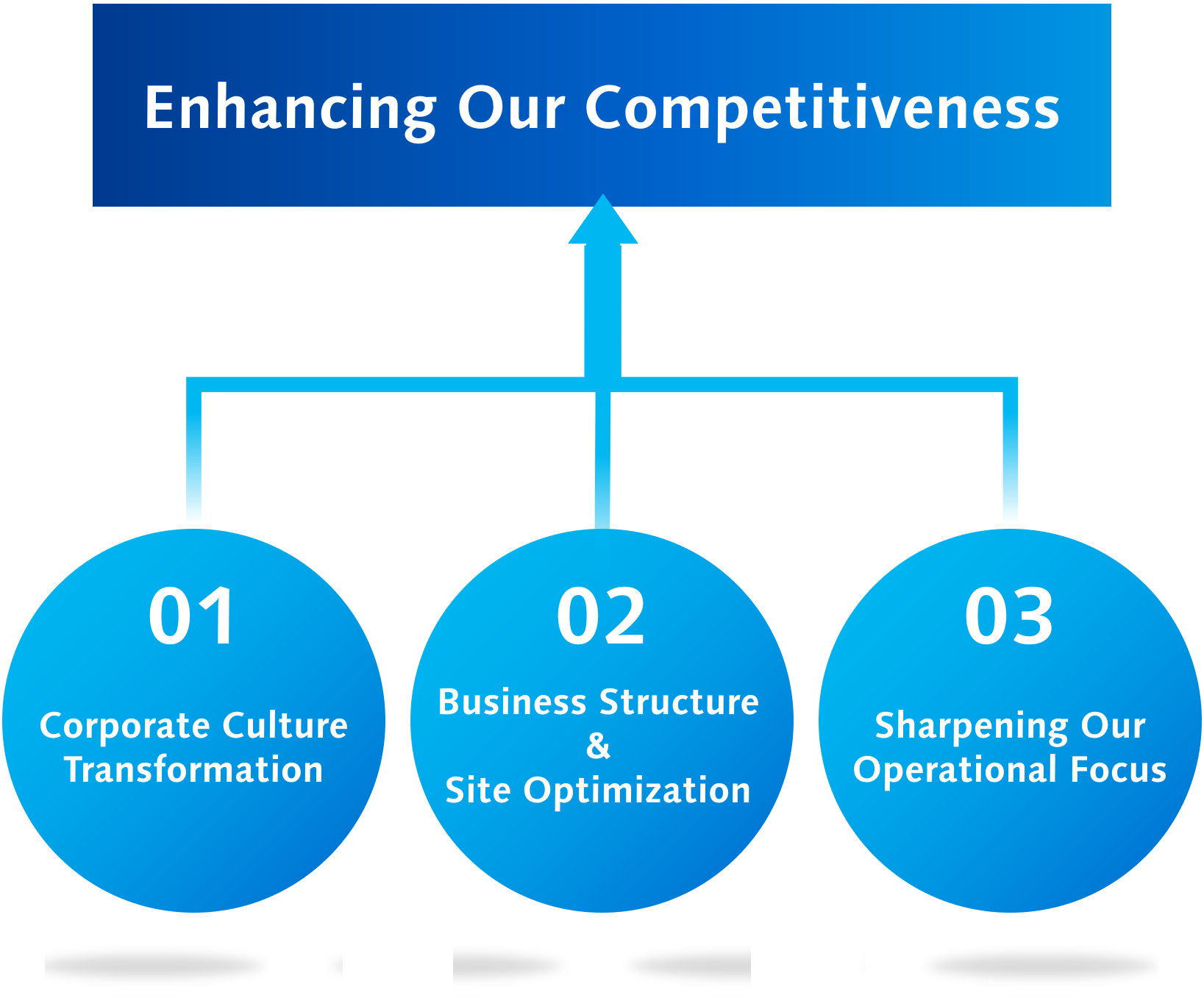
Three Key Reforms to Drive Competitiveness and Enhance Corporate Value
An organization’s culture is the foundation upon which all strategies and initiatives are built. That is why our transformation at Panasonic Connect Group begins with our culture, as we aim to enhance our competitiveness and corporate value.
Culture is the engine of our competitiveness. We are accelerating our transformation by building on an agile and positive corporate culture. We emphasize a mindset of “continuously taking on new challenges” and are embedding these reforms into our management systems.
Through our Business Structure and Site Optimization, we have been streamlining our business portfolio and consolidating sites to focus on competitive areas. This has allowed us to create a leaner business structure capable of achieving sustainable differentiation.
In our operations, we are sharpening our focus on our core business to further refine our strengths. This includes our specialized hardware, software, and solutions. We are concentrating resources to provide greater added value and are also committed to evolving our revenue models.
With our motto, “Continuously taking on new challenges” we will forge ahead with our reforms.
Panasonic Connect’s Sustainability Targets
Achieving CONNECTers’ Success
By practicing our Core Values and continuously transforming and growing ourselves to realize our Purpose, we promote CONNECTers’ Success, enhancing employee engagement and individual productivity.
2030 Target
Employee
Engagement
82.0
* Employee Engagement Survey by Korn FerryFY2026: 64.0
2027 Target
Value-added
per Employee
1.6X
* Calculated value of EBITDA per employeevs. FY2024
Driving Sustainable Procurement
To ensure compliance with Panasonic Group guidelines, we conduct risk-based assessments of our procurement partners and complete the required evaluations.
Ongoing Target
CSR Assessment Checklist Collection Rate from Procurement Partners
100%
As of April 2025
Advancing Decarbonization
To support the realization of Panasonic GREEN IMPACT, we aim to achieve net-zero CO₂ emissions from our own business sites by 2030.
2030 Target
CO2 Emissions from
Our Own Sites
Net Zero
Promoting Diversity, Equality and Inclusion
We do not tolerate any form of discrimination and strive to create an environment where diverse cultures are respected, psychological safety is ensured, and all employees can thrive.
2035 Target
Ratio of
Women Managers
30%
*Applies only to Japan, not to Panasonic entities based in the U.S.As of April 2025: 8.5%
Strengthening Anti-Harassment Measures
We respond to harassment promptly and rigorously while fostering a speak-up culture and creating a workplace where all employees can work with confidence and peace of mind.
Declaration
Harassment-Free
Workplace
Panasonic Connect's Sustainability Initiatives
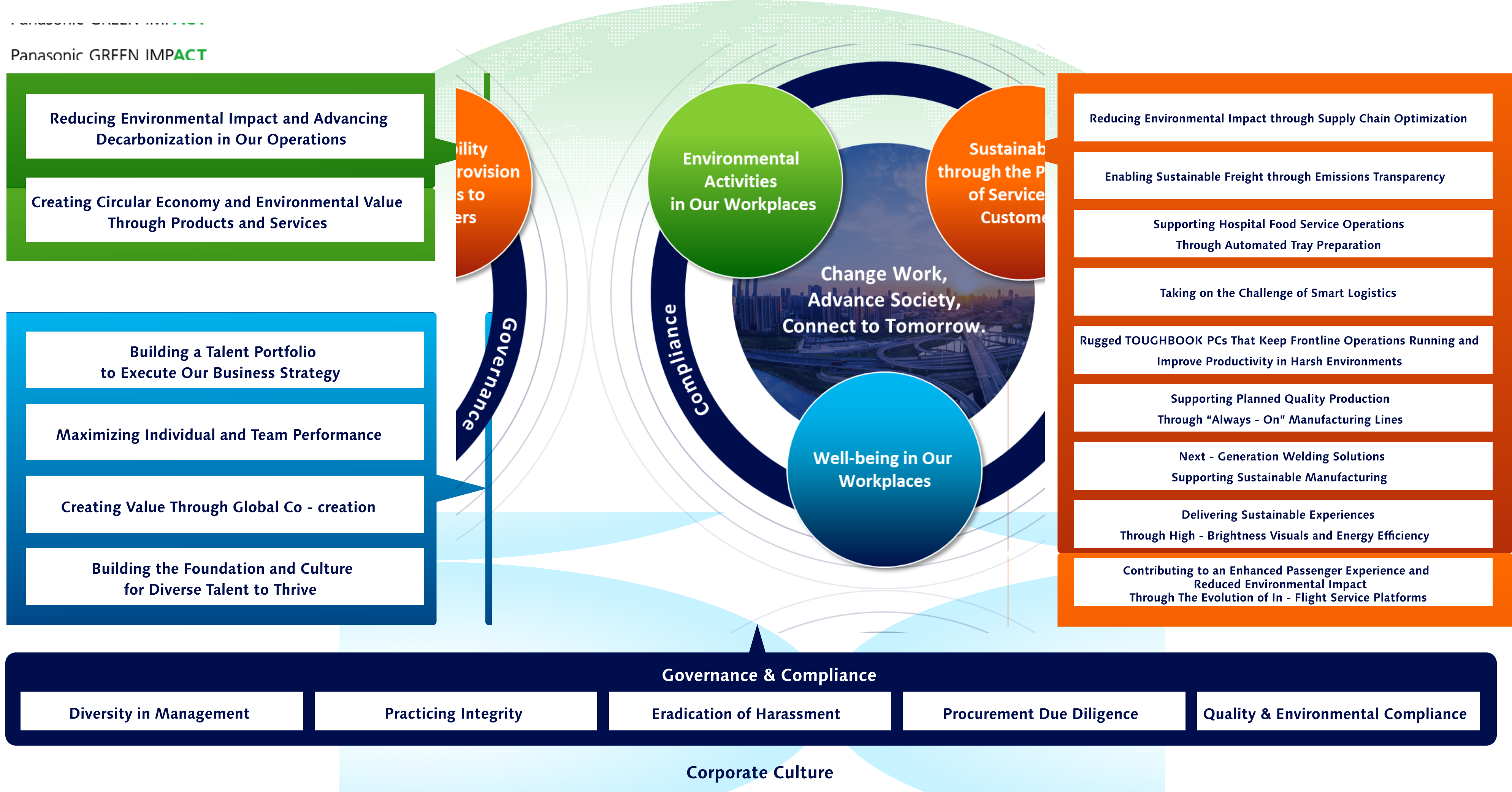
Driving Sustainability at Our Customers’ Frontlines - Case Studies
Reducing Environmental Impact
through Supply Chain Optimization
Case Study - Honda Trading Asia Co., Ltd. (HTAS)
Supporting Hospital Food Service Operations Through Automated Tray Preparation
Case Study - Hospital Food Service Operations
Rugged TOUGHBOOK PCs That Keep Frontline Operations Running and Improve Productivity in Harsh Environments
Case Study - Automotive Maintenance Operations
Supporting Planned Quality Production Through “Always-On” Manufacturing Lines
Case Study - Manufacturing Operations Optimization
Next-Generation Welding Solutions Supporting Sustainable Manufacturing
Case Study - Manufacturing Operations Optimization
Delivering Sustainable Experiences Through High-Brightness Visuals and Energy Efficiency
Case Study - 3-Chip DLP® Laser Projector PT-RQ45K Series
Contributing to an Enhanced Passenger Experience and Reduced Environmental Impact Through The Evolution of In-Flight Service Platforms
Case Study - Converix Aircraft Integration Platform
A Competitive Intellectual Property Portfolio Supporting Frontline Transformation
Panasonic Connect continues to invest in research, development, and intellectual property in technology areas that help solve frontline challenges. Intellectual property is a source of competitiveness and reflects the value we aim to create for the future.
Strengths Revealed Through Intellectual Property Analysis
From a sustainability perspective*1, the combined value of sustainability-related patents held by the Panasonic Group ranks eighth globally and second in Japan, following Toyota. Within the Group, Panasonic Connect has concentrated its intellectual property investments on technology areas that help solve frontline challenges, building a high-quality intellectual property portfolio.
A comparison of sustainability-related patents among global companies based on patent quality and competitiveness shows that, although Panasonic Connect has a smaller patent portfolio than many leading global companies, it possesses highly competitive patents in areas directly linked to frontline transformation, including autonomous manufacturing and supply chain optimization.
In particular, Panasonic Connect holds numerous patents related to Autonomous Factory initiatives within the Circuit Formation Process business. It also possesses highly competitive technologies and patents in welding process and robotic system technologies. In addition, supply chain management technologies enhanced through Blue Yonder contribute to inventory optimization and demand forecasting, serving as an important foundation for improving logistics and supply chain operations.
These technologies are not limited to a single business domain but represent core technologies that support multiple businesses. They contribute to addressing social challenges such as labor shortages, productivity improvement, and supply chain optimization while supporting future business growth.
*1: Based on SDG-related patent analysis conducted using PatentSight+™, a patent analytics tool developed by LexisNexis® Intellectual Property Solutions.
Global Comparison of Sustainability-Related Patent Portfolios
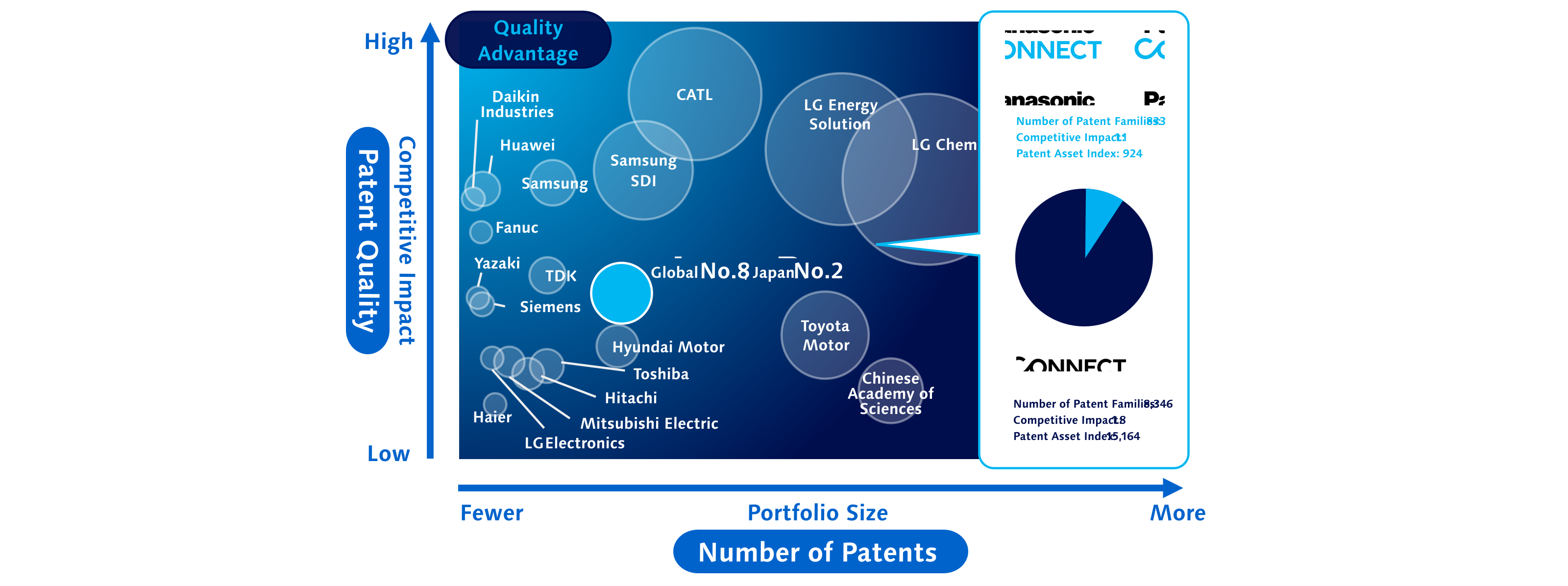
* Patent Asset Index: An indicator of the overall competitiveness and value of a patent portfolio, based on a combined assessment of patent quality and quantity. (Bubble size is based on the Patent Asset Index.)
* Competitive Impact: An indicator of the competitiveness (patent quality) of individual patent families, based on technological impact and market value.
* Portfolio Size: Number of patent families.
* Patent Asset Index, Competitive Impact, and Portfolio Size are defined in accordance with PatentSight+™, a patent analytics tool developed by LexisNexis® Intellectual Property Solutions.
Highly Competitive Patent Technologies from a Sustainability Perspective
Autonomous Manufacturing DX
SCM Solutions
Welding Process and Robotic Systems
Environmental Activities in Our Workplaces
Environmental Performance Data from Our Business Activities
CO₂ Emissions Reduction
We are working globally to reduce CO₂ emissions generated from our business activities.
CO₂ Emissions Reduction Targets and Trends
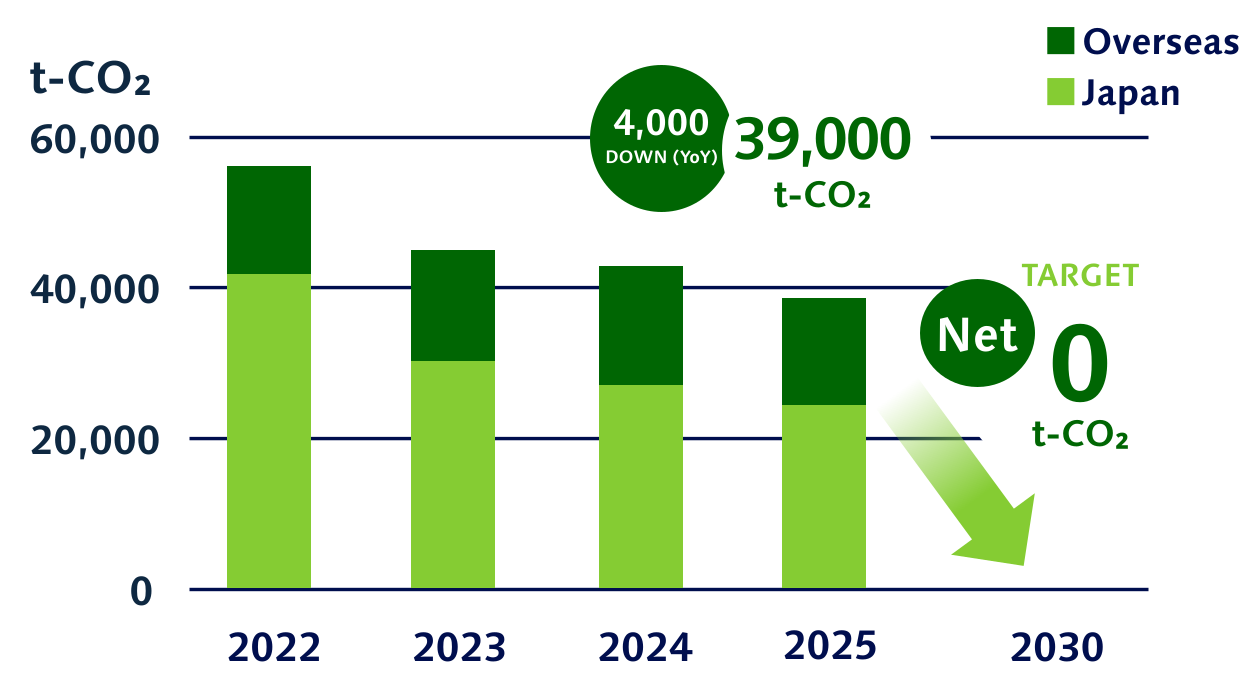
Scope of CO₂ emissions data: Directly managed sites, business division sites, and affiliated companies in Japan (Panasonic Connect Katano and Panasonic Connect Kibi), as well as overseas manufacturing sites. Tsuyama Factory (closed in FY2022) is excluded from certain reporting periods due to differences in data coverage.
Waste and Valuable Material Recycling
Each of our factories is working to reduce waste generation and increase the recycling rate of valuable materials.
Recycling Rate of Waste and Valuable Materials at Global Manufacturing Sites
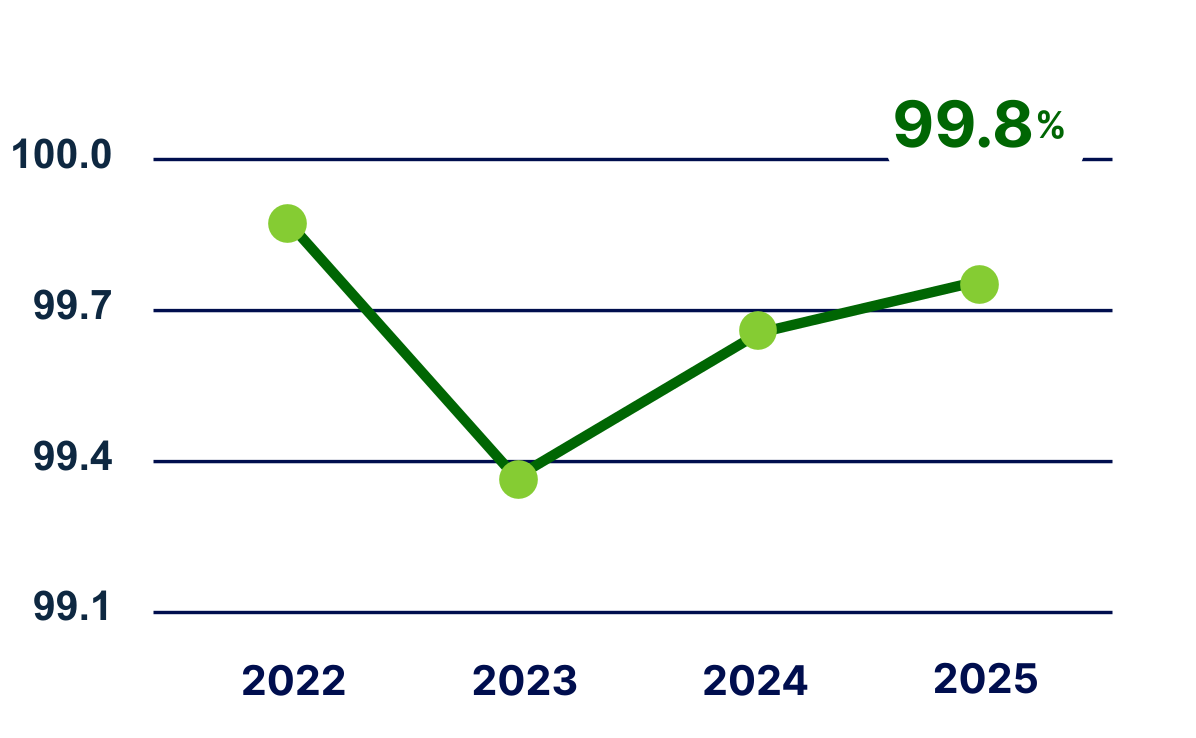
Scope of waste and valuable material recycling rate data: Manufacturing sites in Japan (Kobe, Kadoma, Toyonaka, Kaga, Kofu, and Saga) and overseas manufacturing sites.
Management of Chemical Substances
We conduct hazard assessments of chemical substances at each factory to manage and reduce their use.
Calculated Value of HEI*
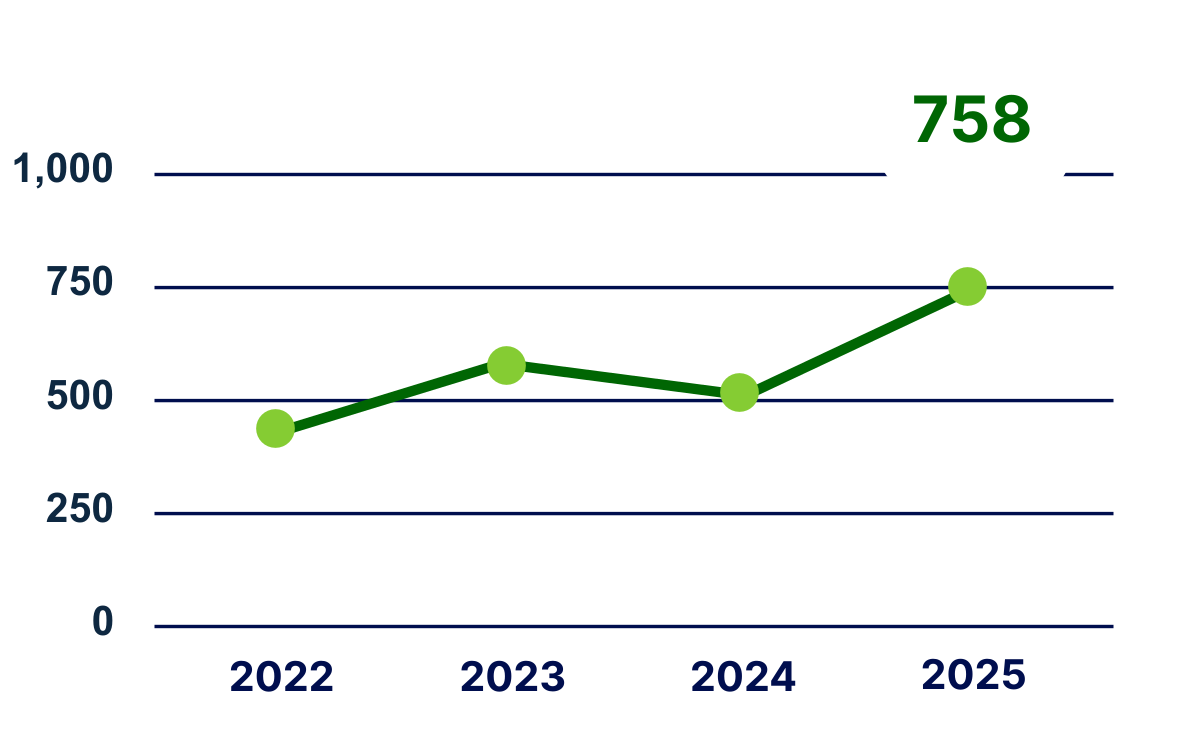
*HEI: Human and Environment Impact, Calculated based on the hazard coefficient of chemical substances and their emission/transfer amounts.
Scope of chemical substance management data: Manufacturing sites in Japan (Kobe, Kadoma, Toyonaka, Kaga, Kofu, and Saga) and overseas manufacturing sites.
Advancing Sustainable Energy Use
Panasonic Connect is promoting the use of renewable energy to reduce the environmental impact of its business activities. At its manufacturing sites, the Company utilizes approaches tailored to local regulations and operating environments, including on-site Power Purchase Agreement (PPA) models*1, to increase the use of low-impact electricity. By adopting energy solutions aligned with the characteristics and business environments of each site, Panasonic Connect is working to reduce CO₂ emissions and advance sustainable energy use.
*1: A model in which a power generation provider installs and owns renewable energy facilities on a customer's site and supplies the generated electricity to the customer.
Future Outlook
To support the realization of Panasonic GREEN IMPACT, Panasonic Connect will continue to optimize energy use across its operations and expand the adoption of renewable energy. Considering the unique characteristics of each region, site, and business environment, the Company will continue to pursue both environmental impact reduction and sustainable business growth.
Kobe Factory
Mobile Solutions Business Division
Renewable Energy System In Operation Since Mar. 2024
Annual CO₂ Emissions Reduction
Approx.350t
Share of Renewable Energy in Factory Electricity Consumption
Approx.15%
*Actual results for Apr. 2025–Mar. 2026 (solar panel installation area: 4,040 m²).
Dongguan Factory
Panasonic Projector & Display Corporation
Renewable Energy System In Operation Since Jan. 2025
Annual CO₂ Emissions Reduction
Approx.857t
Share of Renewable Energy in Factory Electricity Consumption
Approx.36%
At the Dongguan Factory, electricity generated by rooftop solar power systems is consumed on-site under agreements with the industrial park operator and other related parties.
*Actual results for Jan.–Dec. 2025 (solar panel installation area: 6,060 m²).
Kofu Factory
Circuit Formation Process Business Division
Renewable Energy System
In Operation Since Apr. 2026
Annual CO₂ Emissions Reduction
(Expected)
Approx.1,366t
Share of Renewable Energy in Factory Electricity Consumption
(Expected)
Approx.27%
*Estimate as of Jun. 19, 2026 (solar panel installation area: 14,600 m², including replacement of existing installations).
Suzhou Factory
Circuit Formation Process Business Division
Renewable Energy System In Operation Since May 2025, Expanded to New Facility in Feb. 2026
Annual CO₂ Emissions Reduction
(Expected)
Approx.670t
Share of Renewable Energy in Factory Electricity Consumption
(Expected)
Approx.12%
*Estimate as of Jun. 19, 2026 (solar panel installation area: 4,721 m², including installation at the new facility).
Alignment with EPEAT® 2.0 and Advancing Sustainability Across the Supply Chain
The Mobile Solutions Business Division is committed to reducing environmental impacts across the entire product lifecycle and contributing to a sustainable society. All TOUGHBOOK rugged tablets and PCs for the North American market are certified under EPEAT.*1
⬛︎What is EPEAT?
EPEAT (Electronic Product Environmental Assessment Tool) is a global ecolabel for electronics. It evaluates the environmental and social impacts of products and the companies involved in their supply chains across the entire product lifecycle, from resource extraction and manufacturing to use and recycling.
Alignment with EPEAT 2.0
EPEAT 2.0, which took effect in December 2025, introduces significantly enhanced requirements across four areas: climate change, chemicals, circularity, and responsible supply chains.
TOUGHBOOK products released in 2026 meet all mandatory criteria and have also obtained EPEAT Climate+.* We will continue advancing our sustainability initiatives in line with evolving requirements.
* Additional designation to recognize the products that meet more than half of the optional climate-related criteria.
Advancing Eco-Conscious Design
At the design stage, we promote the use of recycled plastics and metals, the management, reduction, and disclosure of chemicals of concern, and energy-efficiency measures aligned with international standards such as ENERGY STAR®. In addition to TOUGHBOOK's ruggedness, we focus on product longevity, repairability, and recyclability. We also provide data erasure and product take-back services to support long-term product use and promote resource circularity throughout the product lifecycle.
Advancing Responsible Supply Chains
We promote climate action across the supply chain through initiatives such as reducing GHG emissions, managing water resources, improving energy efficiency, and increasing the use of renewable energy, and publicly disclose our progress and achievements.*2, *3
In addition to supplier assessments based on our CSR Procurement Guidelines, we promote responsible minerals procurement and disclose information on chemical substances contained in our products, helping advance responsible sourcing and enhance supply chain transparency.
*1: For a list of EPEAT®-registered products, please click HERE.
*2: Sustainability Initiatives
*3: Responsible Mineral Sourcing
Contributing to Resource Circularity and Reduced Environmental Impact Through the Reuse of Used Projectors
Panasonic Projector & Display Corporation provides a one-stop service that addresses challenges associated with the disposal of used projectors.*1
The service offers appraisal and buyback of business projectors regardless of manufacturer, helping reduce disposal costs through reimbursement based on assessed value. By promoting reuse and resource circularity rather than disposal, the service contributes to both cost savings and reduced environmental impact.
Addressing Challenges in the Disposal of Used Projectors
When replacing older projectors with newer models, many customers were unsure how to dispose of existing equipment, resulting in projectors being stored in warehouses for extended periods. The time and costs associated with storage and disposal became a challenge for both customers and distributors. At sites where projectors from multiple manufacturers were in use, disposal methods often differed by manufacturer, and reusable equipment was sometimes discarded.
By promoting the reuse of used projectors, this service helps address disposal-related challenges while advancing resource circularity. Available regardless of manufacturer or model, it contributes to both reducing customer burden and lowering environmental impact.
Advancing Resource Circularity
By reusing purchased equipment or returning it to the resource cycle, the service helps reduce waste and lower environmental impact.
Reducing CO₂ Emissions
Reusing functional equipment helps reduce raw material consumption and lower CO₂ emissions associated with manufacturing and transportation.
Reducing Customer Costs
In addition to reducing disposal costs, appraisal payments can be applied toward replacement equipment, helping reduce overall customer costs.
*1: Appraisal and buyback services are provided by Digital Reuse Inc.
Well-being Initiatives in Our Workplaces
CHRO Message
the Source of Human Capital Competitiveness
Panasonic Connect Group serves as the core company for Panasonic Group's B2B products and solutions business. Building on hardware that operates at customers’ frontline operations around the world, we combine software, AI, data utilization, services, and engineering to deliver solutions that enhance customer operations and contribute to business outcomes.
The environment surrounding our customers continues to evolve rapidly, driven by increasingly severe labor shortages at frontline operations, rising energy costs, and rapid technological advances, including AI. Businesses are now required to operate with the expectation that unexpected change may occur at any time. In this complex environment, sustainable value creation requires professionals with diverse expertise to collaborate globally, share knowledge, and work closely alongside customers in their frontline operations.
At the same time, many experienced employees who have long supported our business are approaching retirement age. Passing on accumulated knowledge, expertise, and frontline capabilities to the next generation, while accelerating the development and growth of younger talent who will lead future business growth, is essential.
Against this backdrop, we regard talent and a healthy corporate culture as the source of competitiveness in human capital. By supporting each employee in taking on new challenges and growing, fostering an organization where diverse knowledge and expertise are connected, and advancing talent strategies aligned with our business strategy, we aim to enhance sustainable corporate value and realize our Purpose.
Chief Human Resources Officer (CHRO)
Managing Director, Human Resources and Facility Services Division
Chief Health Officer
Nobuhiro Shinya
Panasonic Connect's Human Capital Strategy
At Panasonic Connect, we regard talent and a healthy corporate culture as sources of competitive advantage. We place employee, team, and company success at the center of our human capital strategy. The starting point is CONNECTers' Success, where each employee engages in meaningful work, continues to grow, and thrives.
Success that begins with each employee expands to team success through Inclusion, where diverse talent leverages and shares knowledge and experience. This in turn contributes to sustainable growth and enhanced corporate value as One Connect.
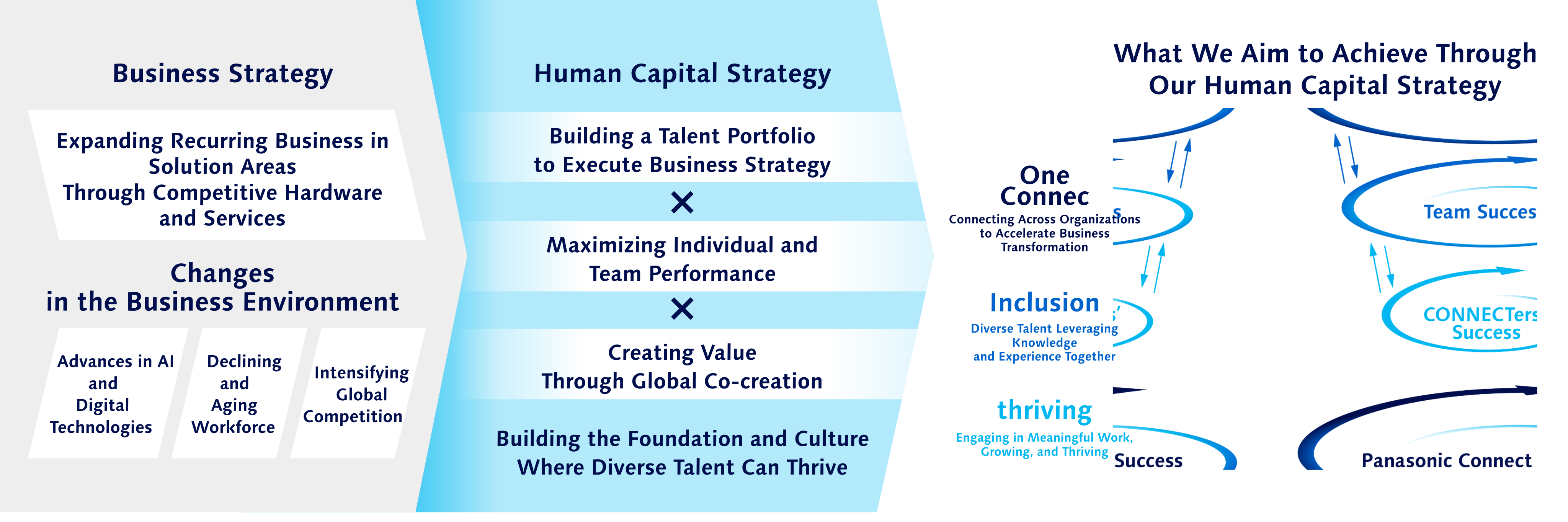
Elevating Our Human Capital to a Level on Par with Top Global Companies
What We Aim to Achieve Through Our Human Capital Strategy
We are implementing a range of initiatives to create this virtuous cycle while continuously monitoring progress through KPIs, including EOS metrics.
By setting targets at a level comparable to leading global companies, we aim to enhance corporate value through the growth of individuals and teams.
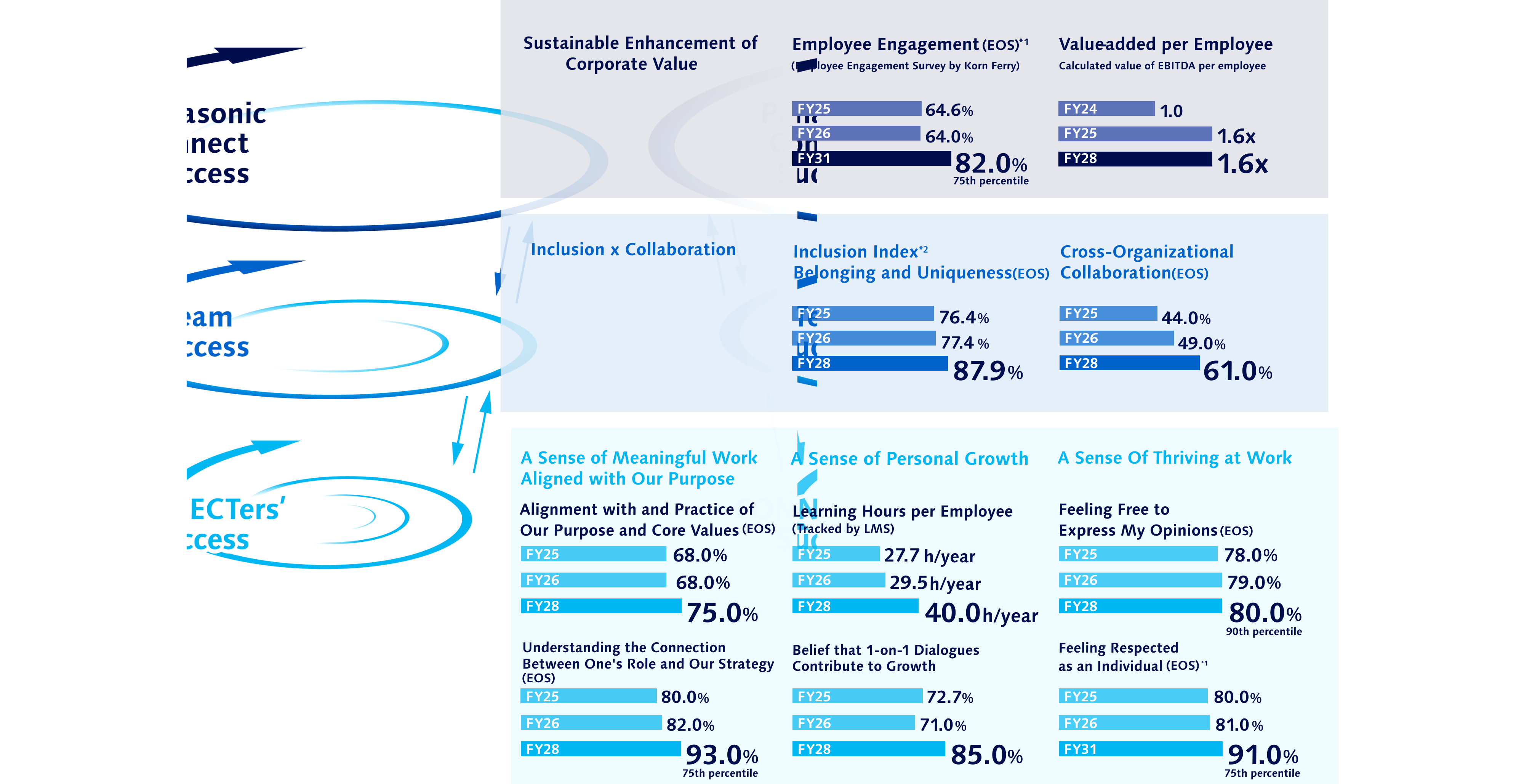
*1: Target values for “Employee Engagement” and “Feeling Respected as an Individual” have been revised and extended through FY31.
*2: Calculated as the geometric mean of the responses to “Feeling Respected as an Individual” and “I am able to use my skills and abilities in my work.”
Well-being Initiatives in Our Workplaces - Case Studies
Sustainability Governance
Sustainability is embedded in management through the active involvement of our top leadership team.
Integrating Sustainability into Management and Business
To achieve both a sustainable society and business growth, the Panasonic Connect Group positions sustainability as a key management agenda. By embedding sustainability perspectives into business strategy formulation and execution, we aim to address social challenges while enhancing corporate value.
Material sustainability matters are discussed and decided together with business strategy and management issues at the Connect Leadership Meeting. By integrating the Sustainability Committee into the management meeting structure, sustainability is no longer treated as a standalone activity but as an integral part of management.
In addition, Sustainability Executive Meetings are held monthly with executive officers from relevant functions to share progress, exchange perspectives, and discuss key themes. These ongoing discussions at the leadership level help accelerate company-wide initiatives.
The Sustainability Office serves as a hub connecting business divisions, corporate functions, and management. By integrating sustainability perspectives into daily business activities and facilitating information sharing on market trends, customer requirements, and regulatory developments, the office supports the execution of business strategy.
Driving Sustainability Management to Enhance Corporate Value
To fulfill our purpose, “Change Work, Advance Society, Connect to Tomorrow,” we believe our business and sustainability strategies must be closely aligned.
Sustainability is not a standalone initiative for a select few. It can make lasting progress only when embedded in our everyday business. Our employees are the driving force behind this effort, and the value we CONNECTers create through our work contributes to a more sustainable society.
The sustainability landscape is undergoing profound change. Regulations supporting decarbonization and the transition to a circular economy are advancing, while expectations for human rights and environmental responsibility across entire supply chains continue to rise. Energy challenges are also increasingly intertwined with geopolitics and economic security. Risks such as supply chain disruption and raw material price volatility are becoming more pronounced, with potential implications for business continuity. Strengthening management resilience is therefore essential to navigating change and achieving sustainable growth.
We will continue to address societal challenges through our business, advance our sustainability management, and create value together with our customers—contributing to a better future for our planet and society.
Yuri Nakada